

Corrosion Control In The Refining Industry
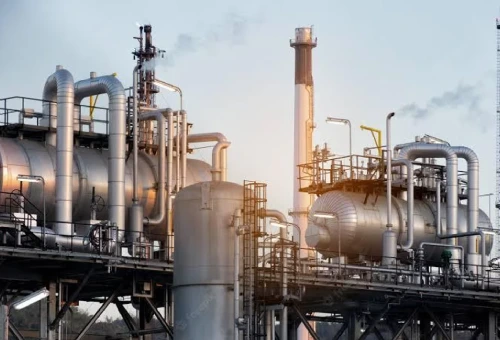
The Refining Corrosion Technologist certification is targeted at individuals who are responsible for identifying, locating and controlling corrosion in refinery environment. Those applying for this certification should possess an understanding of refinery process unit-specific corrosion mechanisms. From the proximity of assets to salt water to the production and storage of hazardous chemicals, refineries pose unique challenges that require specialized training to combat corrosion. The course work covers the effects of corrosion on the production environment and addresses methods to implement corrosion control throughout the full lifecycle, from material selection and design to maintenance.
In the Corrosion Control in the Refining industry course, get an overview of refinery process units and specific process descriptions, and learn to recognize corrosion and metallurgical problems that occur in process units. With this course, you gain valuable information to be used on the job.
WHO SHOULD PURSUE AND APPLY?
The following certification is targeted at individuals who are responsible for identifying, locating and controlling corrosion in a refinery environment. This includes:
- Design engineers
- Process engineers
- Procurement engineers
- Maintenance planners
- Service company representatives who support refineries
- Corrosion and equipment engineers
- Metallurgists
- Inspectors and inspection supervisors
- R&D Personnel
CERTIFICATION EXAMS
Certification requirements include the practical exam administered at the end of course, along with an exam delivered via computer-based testing (CBT). The multiple-choice CBT exam is scheduled separately from the course and delivered via Pearson VUE. The initial CBT exam is included with the course registration.
COURSE LEARNING OBJECTIVES
- Identify the various forms of corrosion and the specific mechanisms that result in each form
- Define electrochemical processes and concepts
- Recognize the different types of corros environment that affect corrosion
- Examples as to how and when to use corrosion-resistant methods of design, materials selectio modification of environment, protective coatings an cathodic and anodic protection
- Examples of control corrosion by selection of design and engineering materials, modification of the environment, cathodic and anodic protection an protective coatings
- Work corrosion monitoring techniques using testing inspection, specimen exposure, electrochemical methods, water chemistry, and analysis of deposits
FOR REGISTRATION
Mr. Rishikesh Mishra, Manager Technical Services, NIIS
Email: rishikesh@naceindia.org / info@naceindia.org
Cell: +91-9820459356 Tel: +91-22-25797354
AMPP India Chapter (Formerly NACE International India Section)
305-A, Galleria, Hiranandani Gardens, Powai, Mumbai-400076, INDIA
Tel: +91-22-25797354
Email: info@naceindia.org
Website: www.amppindia.org / Conference: www.corcon.org